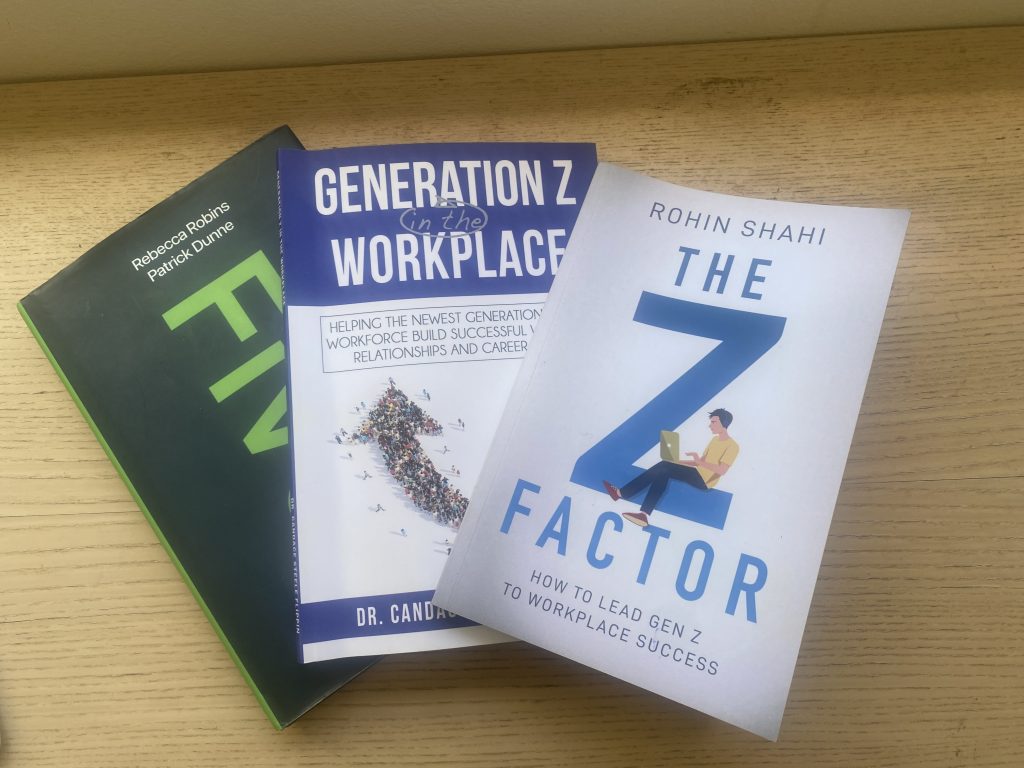
Over the years, I’ve worked with both managers and leaders, individually and in groups, and with their young team, again individually and in groups.
What have I learnt? To connect the wisdom and strengths of each generation so they pull together rather than apart, we must understand their wants and needs. That means mapping out OWANS and the SWANS (Organisation Wants And Needs AND Stakeholder Wants And Needs).
This article provides simple questions for Gen Zs to ask of their supervisors and themselves, and questions for supervisors to ask of their GenZs. I compiled it from my work with graduates at Townsville City Council, with med students at James Cook University, and from a deep dive into research on how to connect across five generations at work.
“it’s important that everyone in a management role is able to relate, to inspire, to motivate and manage people no matter what generation they are from just as with diversity”
Chiara Tamburini of the European Parliament
In this article, I’ll share some ideas for supervisors to reflect on. In the follow-up article, I’ll share ideas for young people to reflect on.
What are the wants and needs of Gen Zs. Check out this TED Talk by Isabel Verstraete. She explores her CARE model.
What do GenZs want from their leaders?
Meaning and Purpose – You’ve got to bring clarity to the impact of their work on the purpose and goals of your organisation – they are meaning and purpose driven.
Coach-like leaders – You’ve got to be a coach-like leader, not use the historical heroic leadership style. Unleash their natural ability to find novel solutions and create learner safety where mistakes are are celebrated as growth.
Mentoring – They want mentoring – that means technical mentorship, peer-to-peer support, reverse mentoring (where they upskill older members in the team in areas like tech), and leadership mentorship (matching GenZs to leaders with different qualities to match their needs, e.g., bravery, resourcefulness, strategic awareness, social connection, work-life balance, etc.). A young person might have several different mentors to match their developmental needs.
Feedback – They need feedback: understand each other’s preferred ways of giving and receiving feedback, meet regularly, do regular informal check-ins, and have structured, frequent feedback sessions. And as a leader, create a safe environment for them to give you feedback.
Health at work – Create healthy, flexible workspaces to support mental and physical wellbeing – link workplace wellbeing programs to performance, connection, and leadership.
Leadership training – Engage young people in soft skills leadership training as early as possible – they want it and know it’s vital for their growth and long-term future in an AI workplace.
Fun and competition at work – Where possible, gamify the modern workplace – GenZs and Millennials love game playing. To do this, you need to create systems that create competition, learning, and growth opportunities. Competition that is created should connect teams rather than individualise and reward merely individual success, which can be very counterproductive.
Attention !! – We live in a world where attention is a valuable commodity. GenZs (though not all!) are amazing at creating content. Encourage them to create content for and with you.
Questions for supervisors to ask themselves
1 – Have you reflected on the lived experience of the GenZ who will report to you? For example, growing up in a hyper-connected world, etc
2 – Have you shared what good performance looks like?
3 – Have you created an environment where questions can be asked and answered?
4 – Have you created an inspiring story for what a successful career in the organization could look like?
5 – Have you explored your GenZs development plan? Is it realistic?
6 – How well do you represent the organization?
7 – Do your actions motivate employees to stay or leave?
8 – What training has been provided or can be offered to ensure that your employees are set up for success?
9 – How do you respond when a mistake is made by your employee?
10 – How do you celebrate success and reward wins in your team?
11 – How often do you provide constructive feedback?
12 – Are your one-to-one meetings regular and well scheduled?
13 – Do you create an environment where your employees can voice their opinions? How do you do this? How could you do this better?
14 – Are you modelling the behaviours you want to see in your teams?
15 – Are you experienced as a mentor – for example, do you mentor inside and outside of the organisation? How could you improve your skills?
16 – What advice would you give to your younger self? How could you share this with your team?
Watch this video on understanding each generation and building bridges between them: