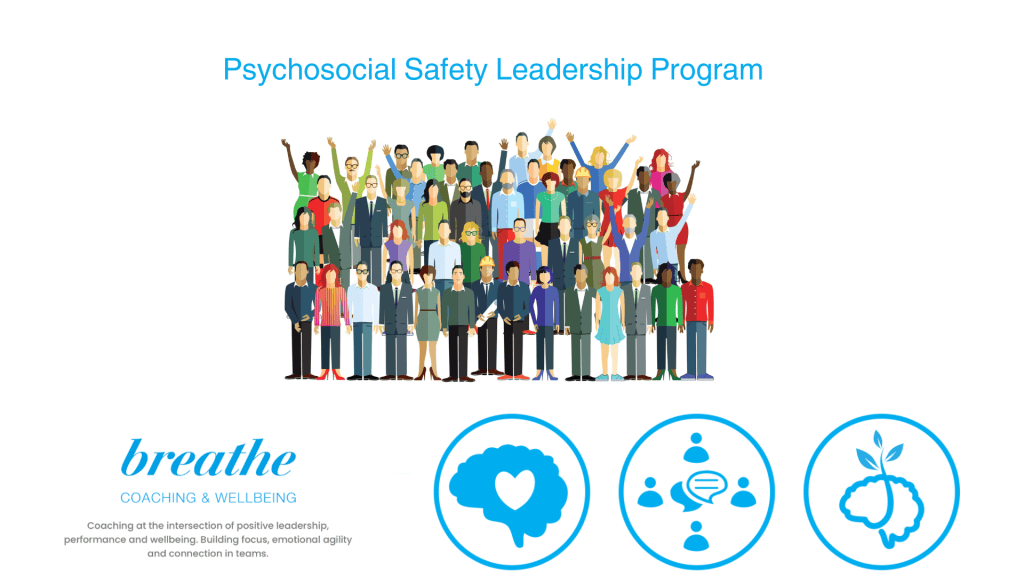
The story begins with a sobering fact: psychosocial risks are not abstract. They’re present in every workplace — from hospitals and schools to construction sites and offices. And since 2023, Australian legislation has made it clear: managing these risks is not optional. It’s a legal duty.
Safe Work Australia defines psychosocial hazards as anything in the design or management of work that increases the risk of stress, burnout, conflict, or psychological harm. Unlike a trip hazard on the floor, you can’t always see them. But their impact is often larger, costlier, and longer lasting.
The Numbers Tell the Story
• Psychological injury claims now make up 9% of all serious workers’ compensation claims in Australia.
• The median time lost for a psychological injury is 34 weeks — four times higher than physical injuries.
• The median cost of a psychological claim is $58,615, compared to $15,743 for physical claims.
This isn’t just a compliance issue. It’s a business continuity issue. A disengaged or burnt-out team can derail projects, damage reputation, and increase turnover. Gallup’s 2025 report confirms this: only 23% of employees in AU/NZ are engaged, while over half are either disengaged or actively disengaged. Stress, not productivity, has become the defining feature of too many workplaces.
The Top 5 Hazards
During the workshop we highlighted the top five hazards that show up most often in small and medium businesses:
1. High or Low Job Demands — Too much work (burnout) or too little (boredom).
Example: a nurse covering multiple wards without breaks.
Flip: prioritisation, pacing, smarter work design.
2. Low Role Clarity — Conflicting expectations, vague accountabilities.
Example: two managers giving different instructions.
Flip: open conversations, co-designed role expectations.
3. Inadequate Reward or Recognition — Effort goes unnoticed.
Example: a team working weekends, but only the manager is praised.
Flip: micro-recognition, peer-to-peer acknowledgements.
4. Lack of Support — No guidance, mentoring, or resources.
Example: a new starter handed impossible targets and left alone.
Flip: coaching habits, peer networks, regular check-ins.
5. Poor Change Management — Change rolled out without communication or consultation.
Example: a sudden restructure with rumours filling the gaps.
Flip: transparent updates, inviting dissent, building ownership.
For a full list of 13 hazards, see the Safe Work Australia Hazard Overview
Talks to Spark Thinking
Sometimes data feels distant. Stories bring it home. These talks can help leaders connect emotionally to the risks:
Chris Strouthopoulos – Psychological Safety: How to Build Trust
Shows how small leader behaviours can prevent hazards like low recognition or lack of support from ever arising.
Watch here:
Adam Grant – Is It Safe to Speak Up at Work? (WorkLife)
Explores how silence is itself a hazard — and why leaders must create conditions where employees share concerns early.
Watch here:
From Hazard to Strength — The Positive Psychology Lens
This is where growth mindset and positive psychology matter. Hazards are the WHAT. Leadership behaviours are the HOW. Every hazard has a “flip” into strength:
• High demands → pacing and prioritisation → sustainable performance.
• Low role clarity → clarity conversations → alignment and trust.
• Low recognition → micro-recognition → engagement and retention.
• Lack of support → coaching → confidence and growth.
• Poor change → transparency and inclusion → agility and resilience.
By reframing risks as opportunities to lead differently, we move from compliance to culture. This is where leaders can make the biggest difference.
Practical Tools
• People at Work Tool — A free national survey tool to measure psychosocial hazards in your workplace.
https://www.peopleatwork.gov.au/
• Safe Work Australia Infographic — A simple four-step process for managing psychosocial hazards.
https://www.safeworkaustralia.gov.au/doc/infographic-managing-psychosocial-hazards-work
• Checklists & Case Studies — See how different industries have managed risks in practice.
https://www.safeworkaustralia.gov.au/safety-topic/managing-health-and-safety/mental-health/resources
Final Reflections
Hazards can feel overwhelming. Every workplace has things we’re proud of and things that keep us awake at night. But leaders are not powerless. In fact, leaders are the difference between a hazard spiralling into harm and a hazard being flipped into growth.
As Timothy R. Clark reminds us:
“Leaders create the conditions by granting permission to belong, to learn, to contribute, and to challenge.”
And as Gallup’s research shows:
“Managers account for at least 70% of the variance in employee engagement.”
The risk landscape is real — and growing. But so is the opportunity. By taking hazards seriously, acting early, and choosing behaviours that flip risks into strengths, leaders can create workplaces that are not only compliant, but also thriving, engaged, and resilient.